
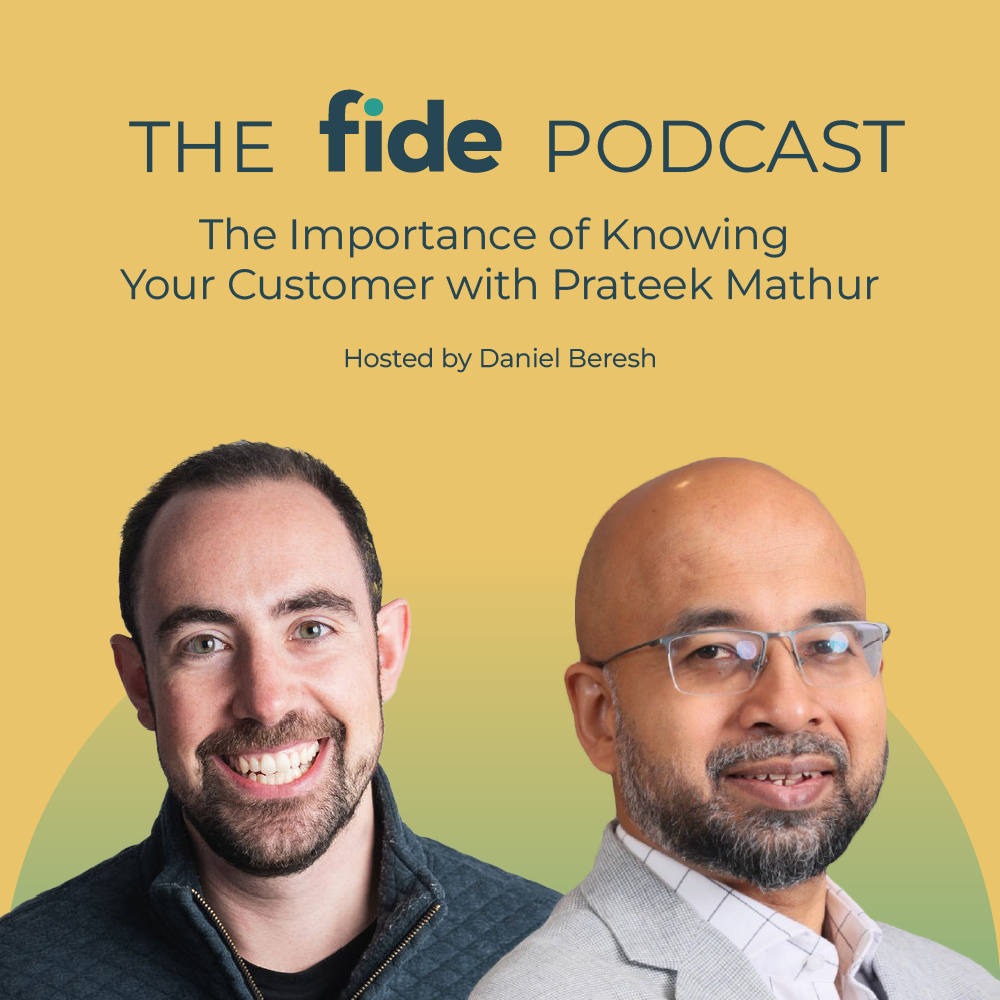

In this episode of The Fide Podcast, Dan Beresh speaks with Prateek Mathur, Head of Marketing for SAP SuccessFactors in Asia-Pacific, about how enterprise B2B marketing is evolving as the traditional marketing funnel breaks down.
They discuss how marketers can win the top-of-funnel battle, understand their customers more deeply, and navigate increasingly complex buying committees. The conversation also explores account-based marketing (ABM), the balance between brand building and events, and how to measure marketing efficiency across the funnel.
Along the way, they unpack how AI messaging, customer research, and trust-building are shaping the future of enterprise go-to-market strategy.
Dan Beresh: [00:00:00] Welcome back to the Fide Podcast. I'm Dan Beresh, founder of Fide, and this is a podcast where we talk about enterprise B2B marketing and really get into the details of how to go to market in a really, you know, a challenging time, 2026. So many things going on, so many things changing in the world, and enterprise buying, I think, being, um, e- even more difficult, you know, than it has been in the past.
Today, I'm joined by Prateek Mathur, the head of marketing for SAP SuccessFactors in Asia-Pacific. And Prateek, I'm so excited to have you here. We've had such an interesting discussion coming up to this, uh, recording, and, uh, I just think you have such incredible wisdom to share with us, so thanks for taking the time today.
Prateek Mathur: Uh, Daniel, it's such a pleasure, uh, to be here with you today. Uh, and, uh, such an exceptional work that you have already been doing to put, in putting together this platform, uh, for marketers, and I'll, I really love this pod serie- this series, and it's, it's just an honor to be here as well. So thank you so much for the opportunity, Daniel.
Dan Beresh: Well, I'm excited to get into the discussion with you, and something that came up in [00:01:00] our, our prior chats was just about the, the marketing funnel, and I think that's where I'd love to start by, you know, asking you about, you in your everyday are, are thinking about how to market to the enterprise. And we think about this, this idea of a funnel, um, which I think is, is somewhat reductive, right?
And, and, and w- you know, selling it to B2C, I know about the product. Oh, this is great. I, I wanna buy it. I buy it. This is not what happens in enterprise marketing, right? There is a, a decision committee. There's so many different touchpoints, and I think increasingly the buyer journey is full of these, these touchpoints that we as marketers have to create, but there's no guarantee of them being touched in a certain order or anything like that.
So- Yes ... the question is, how do you, how do you deal with that as a, as a marketer? How do you, how do you figure out what the touchpoints are gonna be? How do you figure out what that buyer journey's gonna be and, and where do you invest your time?
Prateek Mathur: I think, I think this is a very interesting, uh, point that you made, Daniel, because, you know, in a way, a funnel in a way is, [00:02:00] is kind of- collapsing in a way right now.
And I'll tell you why. Because the decision-making process, uh, in many of the organizations that we deal with is not linear. In fact, everywhere it's, it's now, um, you know, uh, quite complex. And you mentioned a word in your question, which is buying committee, right? And, and I think that has also gone, uh, you know, it's evolved.
So gone are the days when we as tech, uh, marketeers would probably rely on a persona. Probably at times it was an IT buyer who would probably be the gatekeeper. We would have to engage with, open doors, and then we have conversation with the rest of the organization in a very structured, linear fashion, Daniel, as you move forward, and it gave a very predictable, uh, flow to the funnel, right?
And we could put those steps in order to be able to move forward, uh, in the opportunity cycle. However, we now [00:03:00] know that about 60 to 70% of, uh, what we have to tell customers, customers already know, right? Uh, we, we at times, uh, you know, we have this challenge as well where, uh, you know, if you're not in the top five or top four of customer shortlist, which they do basis their own research, then chances are...
And there was a 6Sense study on this one recently where they talked about that if there are about 95% chances that if you are on the, the first five, six shortlist of the customer, that is when you have, you, you have chance to make it. Otherwise, you're probably, you know, only 5% of cus- uh, vendors who are not in the shortlist make it.
So, uh, yes, you're right. The funnel, there is a challenge. How do-- It's collapsing, it's changing, it's becoming dynamic. So hence your question, right? How do we create the right process and what do we do, right? So of course, top of the funnel that we see right [00:04:00] now, uh, we see a lot of, of, um, we say, uh, you know, it's, it's digital engagement.
It's mostly, uh, how do you put content where the customer is, is, right? Where, where they're searching for you, uh, where they are looking for the problems that they are trying to solve, right? So is it that your solution appear naturally in their search when they s- uh, when they are searching in their, you know, uh, to them?
So that's one way to be there with the customer when they need you. That's one, which is through our digital platforms. And then of course, as we go towards the bottom of the funnel and towards, you know, the middle funnel and bottom of the funnel, that's where some of the engagements like, you know, your, uh, in con- your, the connect round tables, which give you human-to-human connect, right?
Because they, and ABMs and a lot of other things, they come into play, which help establish, build that trust and connect that is needed for a customer to sign the final check, right? So-
Dan Beresh: The trust is so [00:05:00] important, isn't it?
Prateek Mathur: That's right. So I think right now you can build a lot of credibility through the digital engagements that the customer do.
You can inform them of, you know, the customer about your product, your solutions you're offering, how you solve the business problem. But unless they have, uh, the, it, you know, in even in the world where a lot is happening on digitals, the tech decisions are still happening in the, in the rooms where people sit together, discuss, and then s- you know, once that level of trust is achieved, that is when you go ahead and sign the check.
So, yeah.
Dan Beresh: Let's talk a little bit about that top of funnel. Yeah. Because what's really interesting, especially in a, a tech world, is you're not in the engineering team. Mm-hmm. You don't have control over the fact that X thing, you know, works or doesn't work, and yet you have to make sure that your product is part of that top five list, to your point.
Otherwise, the, the person is typically not even considering it.
Prateek Mathur: Yeah.
Dan Beresh: So what kinds of things are you doing to ensure that you do show up, that [00:06:00] you are top of mind, that you are part of that consideration list?
Prateek Mathur: Now that's, that's, uh, very interesting why you say that. W-well, you, because the reason why a customer is looking at your solution, right?
Um, is so diverse, right? It's sometimes, um... For example, I'll give you a small example, right? I look at APAC, um, Asia Pacific and Japan for SAP SuccessFactors solution. When I now, uh, look at a customer in Japan, right, who's looking for, say, uh, their, their objective of, uh, looking as it could be, um, you know, how can they augment their workforce with AI?
How they can probably do more with less workforce, right? How do you get... they can upskill, um, uh, you know, that their age old workforce or an aging workforce, if I may call them, to, uh, for a lack of a better word. But how do we, um, really, you know, bring the best out of them, right? So [00:07:00] and then the AI argumentation and all that, uh, upskilling comes into picture.
But when you look at a high growth market like, say, Southeast Asia, China, India, you know, these markets, you would probably look at, um, how can we use the resource, vast resource pool that we have to solve the problems of the world. How do we look at the skill gap in terms of other European countries, US, others, and how do we, you know, hire the right kind of resources?
So the same skill conversation, but the context are so widely different, right? Now, if my- Yeah, yeah. Why I give that example was that my, you know, if I'm solving the same skills solution, my going in position or the business problem that I'm s- going to solve would be different for these two set, set of customers, right?
So hence, it's important that, one, when I am, you know, looking at this, uh, problem, I'm able to understand my customers, what is it that they're looking for from my solutions, [00:08:00] and then hence from that, how do I, uh, really convert that into powerful content- Right? And, and put it out there for con- uh, customers to consume.
And help them also understand how my solution somewhere, you know, would be able to address that problem, right? So, so you, you talk about the problem, and then you really give them the proof of the pudding by actually demonstrating that capability. And the third part, which is, uh, very essential in this entire journey, is to have credible customer stories who have actually done that before with you, right?
So I think this is how all this kind of, you know, probably, uh, come together, Daniel. And, um, so yeah. That, that would be my take on how you probably go about solving things. Get the content strategy, strategy right, understand the customer, uh, get the, get your content funnel, uh, you know, created well so that, you know, you are...[00:09:00]
It, it, it is almost like, you know, you're holding the customer's hand from one end of the bridge and helping them walk through it, right? Uh, so that they-
Dan Beresh: Yeah, and you would hold a different customer's hand in a different way, right? Yeah. You have to kinda know that customer. Some people- Yeah ... wanna move fast, some people wanna move slow.
Move slow. Some people want more hand-holding, some people want less. Some people want encouragement, some people wanna do it on their own.
Prateek Mathur: Yeah, some of them are on roller skates and some of them are not, so basically, yeah.
Dan Beresh: Yeah. I used to have this mentor when I was younger, and one of the things that really stuck with me that he had said is, "It's like you're on, you know, a soccer/football pitch- Yeah
and there are goalposts at the end of the field. But you have to understand, in the work we do, those goalposts are gonna move, and you have to kick the ball toward, you know, the goalposts where they are, not necessarily- Agreed ... just in the exact same spot every single time." That's, that's true. Um, or as a Canadian, I really should bring up hockey here, I think is- Yeah.
uh, it's, it's where's the hockey net- That's right ... at the end of the ice. Um, but either way, yeah, I think it, [00:10:00] it's, it's so important to start by understanding your customer. And, uh, you know, I think, uh, a lot of the work we do, uh, people I'm seeing are very tempted, even in enterprise, uh, situations where they have, uh, lots of support and, and big teams and budgets, there's still a tendency to wanna just go and make that customer story video or go- Yeah
and, you know, write that web article. And I think to your point, it's a matter of first starting by understanding the customer.
Prateek Mathur: Absolutely.
Dan Beresh: And, and also the customer understanding is not static, right? Like, people change, and the market's changing constantly. So I think it's, it is a matter of figuring out how to do, uh, research and, and understanding and, and kinda having that input kind of being a constant into what you're doing-
Prateek Mathur: Yeah
Dan Beresh: and being humble enough to say, "We don't always understand our customers perfectly. We seek to understand," and from there creating content that we know is gonna resonate with them rather than, I don't know if you see other folks doing this, perhaps not in SAP, but, uh, elsewhere is, is just saying, [00:11:00] "No, no, like we know.
We, we know what they want," and then we go, "We'll, we'll, we'll go make marketing." Yeah. And I think a lot of that time that's where we start to see things that don't stick.
Prateek Mathur: Uh, so true, Dana. At times we have seen so much of, you know, the content which is so much inside out, right? Which, which is just talking about- Yes
feature, functionality, products, what you offer. That's great, but, you know, uh, that's something you would need down the line. First thing is the first, why would customer give you attention? You know, what is it that- Mm-hmm ... you're solving for? You know, what is it that the customer will lose if he doesn't buy your solution in next one years, six months timeframe, whatever it is, right?
So unless and until you are hitting that particular pain area or a problem or an opportunity that the customer has, I don't think you would get the attention. And especially the amount of competition that we have, the amount of, uh, you know, the customer is getting inundated with so much of messaging [00:12:00] everywhere.
So if you do not resonate well with what the customer is looking for, then ch- chances are you are probably what we call as common f- column fodder, right? You are just put in as a fodder- Yeah ... just to make the list. Yeah. But somewhere, you know, fifth and sixth, you know, out of the... So, yeah. You're
Dan Beresh: filling up the part of the feed on LinkedIn that everyone scrolls past.
There has to be part of the feed that everyone scrolls past, right? Because the algorithm wants to, to, you know- Yeah ... but make certain content interesting and other content not. And, and- Yeah ... thank you very much for filling up the rest of the feed so that, you know, the things hopefully that you and I are are doing are gonna be a little bit more resonant.
Absolutely. But it reminds me of a, a situation where, um ... It's kind of, I have an interesting job because we hire subcontractors, uh, and, and, and vendors to help with, you know, grow our business. And I remember this conversation I had once where the subcontractor said to me, "Dan, I should have charged you way more for this project because I delivered so much extra value toward the end- Mm
of this project."
Prateek Mathur: Mm-hmm.
Dan Beresh: And I just kind of sat [00:13:00] there, and I was incredulous because what he had done was something that I didn't want at all, I didn't need. And he just assumed that this is something that I would benefit from, and I, frankly, I feel like I had, I took no benefit from it. So he didn't do the research.
He didn't seek to- No ... understand, and instead- Mm ... just told me that I should be paying more money for this product, and I think that's where we start to have big problems.
Prateek Mathur: Absolutely. Absolutely. Understanding ... You cannot assume what the customer wants. You always need to probably, you know, always have an ear, um, to
You have to always sense and respond.
Dan Beresh: Yes, exactly. It's a, it's a conversation. It w- Yeah ... as marketers, we shouldn't be talking at our audience. We should be speaking with them.
Prateek Mathur: Totally.
Dan Beresh: So let's talk a little bit about personas. I know we've talked a little bit about it already, Prateek, but, um, there's so many different people who you could be marketing to.
I mean, you know, thinking just about your role, Asia Pacific, I mean, there's a number of countries, different cultures, and inside of each of those countries, each of those companies that you wanna go after, [00:14:00] there's HR people, you know, there's, uh, technology people. There's a variety, and I imagine each of those people has a bit of a different definition of what value looks like.
Prateek Mathur: Yeah.
Dan Beresh: So how do you, y- starting from the place of knowing that you have to speak to these people in a different way, but also knowing that you're not infinitely resourced-
Prateek Mathur: Yeah ...
Dan Beresh: you can't come up with 1,000 different talk tracks, and even if you did, how could you keep track of them? How do you manage that challenge?
Prateek Mathur: Yeah. So, um, you know, so let's, let's look at what's happening, you know, and, and let's just understand the just gravity of this whole thing by, um, you know, first of all, we need to understand as business, what are we losing if we are trying to serve everyone? You know, um, as a business, you should have ability to piss off people.
What I mean by that is- ... you know, there's something which I recently read in a book called "Diary of the CEO." I would highly recommend, uh, that, uh, [00:15:00] you know, our listeners here read, uh, it, you know, uh, look at that book. It's very interesting, very contrarian views about few things that we kind of believe, but you know, really thought-provoking.
So it actually says you should pick piss off people, which means you know how to prioritize, right? But why is it important to prioritize? The simple thing is that, you know- Uh, y- there are right now these complex buying committees, you know, but there are some very recent research work which was done in, in this direction.
Like for example, Forrester, uh, did in, uh, 2024, it's, it's very famous, we all know this, about probably 86% of B2B purchase decisions stall during the buying process. And, and the reason for that, they attribute, is because of a possibly a single stakeholder not being probably, uh, aligned, uh, during the early stage of the buying journey, right?
Uh, Gartner, for example, said that 74% of the buying team experience unhealthy con- conflict during the [00:16:00] decision-making process. Uh, so- Hmm ... so if you, if you really see, uh, uh, this is, uh, a serious thing within the customer organization itself, right? The way they are going about the decision, it is creating their own in- the internal dynamics that play between the, uh, the buying committee also plays an important role on how the, uh, the discussion's gonna move forward.
And then finally, you probably, you know, there are some other, uh, like for ex- and, and the buying committee is also getting more and more complex. There was a time where we looked at an average of five to six, but, uh, 6Sense recent report said that the buying committee members have increased to now an average of 13 individuals in an enterprise or a, uh, kind of a, you know, decision-making process.
So, you know, there is definitely a need for us to look at the entire construct seriously. One, we need to have the relevant content mapped to the buying committee. So if I'm talking to HR audience, they're-- it's not [00:17:00] just HR audience that I'm trying to sell to. There
is IT involved, there is C- there are CFOs involved, there is a CEO involved, and then there is, there is, there are whole lot of other critical decision-makers and users who are part of those buying committees doing research on those products. So, uh, the content need to be mapped to them. More importantly, you know, what IT companies have done in the past is they have addressed these buying in personas individually with the content.
They have not really bought- People together, right? Because that's where the conflict comes- Mm-hmm ... right? It is, it is not in their individual silos, they'd love probably what they have. But when they come together, do they have conflicting priorities? You know, how do you try to solve for that? I'll give you one example, and sorry I'm taking a long, long time and, uh-
Dan Beresh: No, this is very interesting because I think there's a tendency to want to-
Prateek Mathur: Yeah
Dan Beresh: create an individual piece of content for each.
Prateek Mathur: Yeah.
Dan Beresh: I'm so curious, like how do you, how do we solve for this?
Prateek Mathur: Don't get me wrong, we definitely [00:18:00] need individual content for individual personas, but during the engagement there need to be a time and an engagement where these personas come together. For example, I, a few years back when we were looking at this problem, we had an issue of how do we sell the value of entire cloud transformation to an organization?
Because cloud transformation was basically not just a software upgrade, it was also about how do they reimagine processes in cloud, right? A very similar thing is happening with how do you reimagine process with AI. So I was talking about a few years back when we were looking at cloud transition really, and at that time also there was this complex problem for bringing people together.
So, you know, I, um, I did a campaign called Live Business Leak where we created a, a simulation, a game on a software or our ERP product, and basically invited [00:19:00] cross-functional teams across multiple customers to participate in that, which was like one company- Hmm ... competing with other, right? On that virtual game.
It was like running a-
Dan Beresh: Oh, wow. That's very interesting ...
Prateek Mathur: it was like running a company where one day was equaled to, like, one minute, and they played for about, you know, a quarter, which is, you know, uh, about 90 minutes of a game that they played. And they compared against who, who had a better P&L at the end of it, right?
So, uh, and there- Huh ... was a cross-functional team of, you know, sitting across different tables competing with each other. Uh, it was a phenomenal success. We got the im- the amount of conversation we got started between those teams and how they see value in working together coherently in a li- uh, you know, business environment like that was really, really powerful.
So I'm just trying to tell you that, you know, you need to kind of narrow down the funnel, look at the buying committees, [00:20:00] address to those core, uh, their, their business challenges, but at some point in time, also find a way to bring them together to show the value that there is a gestalt effect of the solution that you will deploy, right?
Dan Beresh: What a great idea to kind of force people to be-
Prateek Mathur: What
Dan Beresh: do you, what do you want- ... in the room together and, and almost solve their challenges themselves instead of you- Yeah ... having to go in and-
Prateek Mathur: Yeah ...
Dan Beresh: or, or your sales team have to go in and, and objection handle. Well, let's talk about brand versus events now.
I mean, uh, the interesting thing is that, again, it's, it's, it's kind of tactics versus building up the, the, the base. I, I see it in that way at least- Mm-hmm ... where you, you know, you need to invest in brand. You need to be strong enough that when you're in that room, you have a lot of cachet enough for the person to say, "Yeah, I'm taking you seriously.
I'm gonna have this sales conversation." But at the same time, you can't invest everything in brand. You have to go out and do [00:21:00] real field marketing, right? You have to make the folks out there understand the value that you bring and, and the updates that you've made and the new things that you're releasing and all that.
So how do you think about, you know, doing more kind of content production, more kind of brand building versus actually creating that human-to-human connection?
Prateek Mathur: Uh, well, I think it's a, it's a bit of mix of both, right? You, you- there's... Of course, the question is not what would you choose, um, one, this brand, uh, versus, you know, event, but it's, it's like, um, you know, how, how do you optimize, uh, between the, in the, your investments?
The
Dan Beresh: mix. Yeah, exactly.
Prateek Mathur: What's the- Yeah ... perfect mix for you? And, uh, while I say the brand creates that pull, that reach that you want, brand basically gives you the, the right to be in the top, uh, you know, three to [00:22:00] four, you know, shortlist of the customer. And then basically your events, uh, you know, uh, are basically the tool which takes you from those list of four customer to be the final one which gets selected, right?
So- Mm-hmm ... I think there is a role that a, a brand plays in this journey, and then of course the role which an events plays. Now, uh, it would be very difficult for anyone, I, I guess, to put a, an investment number. Why? Because it depends on what is the efficiency of each of your engine that you're deploying for your brand initiatives, and what kind of events are you doing, right?
And at each stage, of course, there is, there is some sort of conversion involved. Even if you're looking at, for example, brand, now there are, uh, there are ways in which you measure your brand efficiency in terms of, you know, how's your top of the funnel looking like. You look at top of the m- funnel metrics like [00:23:00] engagements, et cetera, to, to understand website visits and so on and so forth to look at, okay, what, what exactly is happening there.
Would that number, is that number good enough for the kind of investments you're making? But then the second point is, if your conversion strategy is not good, then no matter how much you're investing on brand, you know, you'd, you'd probably end up not having a very effective ROI, uh, for what you're- Yeah.
And, and this became even more, this becomes even more challenging in a multi-brand, uh, heterogeneous kind of b- you know, uh, heterogeneous brands like Microsoft, SAP, some of the brands that I have worked with, right? Uh, so that's where, you know, this, this kind of challenge also in a way multiplies, right?
Because there you are, uh, trying to probably, if you're representing a sub-brand, then you're trying to identify your own identity within the main brand, leverage the, the, the ma- [00:24:00] the brand itself, the principle, the master brand, and then how do you connect your value proposition to the overall pr- proposition of the brand.
I hope I'm making sense there.
Dan Beresh: So you've talked- I, I mean, you, you talked about this really great, um, you know, metric and a way of thinking about it, which is not how much do I invest in each of the brand- Yeah ... versus events, it's how do I make sure this engine is running efficiently so that I know my dollars are getting spent?
So, so what I'm really wondering now is, all right, you're looking at this from a top-down level. You've got to figure out what you're gonna spend in each area. How do you know that it is being efficient? How do you measure efficiency in both camps? How do you figure out when it's time to invest some time here on the left or invest some time on the right?
Prateek Mathur: Oh, great question. I think it's about, um, keeping track of your conversion rate throughout the funnel, and it's, um, you know, how is your top of the funnel, uh, uh, you know, strategy, whether it's working or not, right? Whether you're [00:25:00] getting enough eyeball with the target personas that you have in mind, whether the buying committee, uh, is interested.
So you have to look at some of the metrics there, like, you know, uh, what is, uh, what is the depth per account that you have in terms of, you know, the buying persona engagements, for example, right? How many accounts you've been able to reach, uh, with some of the top of the funnel content. Then comes the second part that now since you've got your customers hooked on to your content, then what is it that you are offering them to really convert?
Now, I'll give you a small example there. There was a time where we were doing this webinar, which was placed as an op- you know, somewhere in the middle of the funnel. We've got a lot of engagement from... And this was a tax solution that I was talking about, um, way back. And, uh, when we, uh, sent out certain emailers to the target set of customers who have engaged with us in the past on the solution, there were hardly any response from that.
And, um, when I-- when we reviewed that content, we realized that [00:26:00] we are again, you know, we have fallen to a trap of, uh, uh, the-- those-- the same navel-gazing content, right, which is basically inside out. So we went back, did some research and came back that what is it that the customer is looking for? And we realized that the customer said, you know, that there were certain, uh, tax solution.
We said that, you know, our solution can help you, uh, get eighteen percent of your input tax credit. If you'd like to learn how, join this webinar, right? Now, that was a very powerful when we sent the communication with that. We saw a huge-- a-an amazing amount of conversion there, uh, right? Um, about, uh, just by a couple of emails, we had hundreds and hundreds of people joining in for that webinar out of few thousands of, uh, targets paid that we had.
And, um, it was widely successful. But then when we were delivering that content, we have to ensure that we keep in mind the problem statement which the customer has signed up for, and that's [00:27:00] where you would see a better- Yes ...
Dan Beresh: conversion,
Prateek Mathur: right? So the problem statement was how do I solve for an input tax credit, right, which is basically about eighteen percent.
Now, when I am showing that middle of the funnel solution capability, I need to ensure that it's not talking about You know, the speed of the solution or how many records it can process. Customer's not there for that, right? It's, it's actually- Mm ... talking about the key financial metrics and how you're solving for that.
So stick to that, uh, and deliver it convincingly. So that's basically give, give the better conversion. So now, so, so I think what I'm trying to get at is that we need to, at all times, review our content strategy, because that would determine how your conversions look like. If you have great content which is connected across your funnel, then-
Dan Beresh: Yeah
you
Prateek Mathur: would probably see better conversions from, uh, top to bottom, and much better ROI of your marketing [00:28:00] investment.
Dan Beresh: I hear you saying a couple things which I think are really interesting and so relevant to the kinds of things we do. I mean, first thing, navel-gazing content, as we've talked about, you know, just now, is so important to, to just, uh, just say stay away from it.
And, and maybe to understand also you're not always gonna understand what navel-gazing content is until you put it into market, and it... You say, "Oh, this isn't performing." So- Yeah ... just really having the ability to go out and, and, and do that research. Absolutely. And I personally think a lot of folks feel like research is this really big behemoth thing that is so scary, and it's gonna cost so much money, and, you know, I'm gonna do it, and then I might not get my ROI from it.
And I, you know, it's not creating content, so the content has to be, like, pushed out two mon- You know, it's ver- it's kind of nerve-wracking. I think that going out and doing the research can be actually quite simple, and there are ways to... You know, in my view, even if you speak to just a small number of customers, I, I'd say that's a win versus speaking to [00:29:00] no one and, and, and just coming from a kind of an internal perspective.
Prateek Mathur: Totally. I think, you know, uh, the, the best opportunity that you have to do your own research is go and talk to the customer. You know, I've seen a lot of- Mm-hmm ... marketeers right now sit in the corner, you know, just, or probably just managing that event that they were supposed to, where you have such a huge opportunity of engaging with your customers to understand what, what's keeping them awake at night, right?
So I think it's so important that, uh, as marketeers, we don't feel shy of, uh, talking to customers, um, about, you know, their business problems, their issues. And that, of course, needs, um, us as marketeers to be well aware of, uh, what, uh, what are the s- the solutions that we offer and what kind of business problems.
So it, it mean, you need to be a bit of a subject matter expert in some way, right? Uh, but, but yeah, so that at least you can get a feeler of what your customer wants, and can translate it into effective [00:30:00] assets and communication.
Dan Beresh: I hear a lot of our clients who are, you know, marketers saying, "Look- I'm not gonna go talk to our customer because I have this business partner who is in the room with these customers every day and deeply understands their, you know, problems and their plight.
My opinion, I don't know, feel free to disagree with me, Prateek, I'm curious what you think. But- Mm-hmm ... I think that those business partners are very, very valuable.
Prateek Mathur: Yeah.
Dan Beresh: But I also think that if you are only relying on secondhand or thirdhand information that's filtered through people who work inside your organization, that you do open up a risk that you are gonna create that navel-gazing content, and that at least going out to a few folks and speaking to them directly from the marketing department, I think can give you incredible insight that might be glazed over by a business partner who's, you know, done this for 20 years and isn't really thinking about that kind of research, that kind of curiosity [00:31:00] mindset, who's always in that sales mode, you know, 10 steps ahead of the marketer.
So what do you think? I, I think there's value to... Like, if you have business partners in your organization who can give you information about the buyer, I think that's great. But I, I'm not sure that's enough. What do you think?
Prateek Mathur: Uh, yes and no. Actually, at times, we, you know, we are marketers, we are really, uh, pushed in the back end, and we do not have opportu- Mm-hmm
nities at time to really go and engage with the customers. I'm saying if you get it, make the most use of it. But if you don't, uh, I think we should definitely never lose an opportunity to engage with the people who do have that opportunity- Yes, yes ... and get that feedback. Uh, we should know to ask the right question, you know?
Uh,
Dan Beresh: because- That's the, probably the most important thing, isn't it?
Prateek Mathur: Yes. That's right, because it's never easy f- to, for us to really go and have a conversation and to get exact insights that you want from a sales guy who would probably just, [00:32:00] uh, talking to you about the next opportunity or lead that you're going to give, which is going to close and, you know, help him make his bonus.
So, uh, so that- Yeah. So, so yeah. So that's, that's where I think we need to find ways to do it. Research, as you said, are not expensive. Uh, insights are available all across. There are so much of insights available in the data that you have. You know, the marketing data- Yes, yes ... is so rich. You can just, uh... And if you could really spend time and you'd know what to look for, I think there's enough insights available and, you know, to understand what customer is really looking for
Dan Beresh: Yeah, I love that.
You know, maybe, maybe that's, that's, that's a good place to start instead of immediately saying, "Well, I have to do research." It's what, what data do I have now? What, what can I mine? What have I not looked at? What have I overlooked? What have I assumed that I knew that maybe I didn't? Totally. And I think, uh, you know, at, at the end of the day, it seems to- it comes down to humility a little bit and understanding that-
Prateek Mathur: Absolutely
Dan Beresh: we [00:33:00] think we know the customer, we think we know what content we're making, but if the content we're putting out there is not working, then we have to kind of look back at ourselves and say, uh, "We've done something wrong, and, uh, the only thing we can do is move forward. And let's, let's use the data, let's do research as needed, and, and, um, and we'll go out there and we'll do better tomorrow," right?
Prateek Mathur: Absolutely.
Dan Beresh: Let's talk a little bit about account-based marketing. Mm. Because obviously such a big thing and, you know, for large enterprises like SAP, uh, I imagine a, a, a huge benefit because you can really get to know companies, their individual struggles, and, um, and be a little bit more effective.
Prateek Mathur: Yeah. So ABM is such a powerful tool, and I have always been a strong believer of what it can do, especially with your top accounts, right?
Uh, first of all, I... You know, an account-based market, as you rightly said, is basically marketing when you put account in the center of the entire [00:34:00] conversation, right? So it's, it's like marketing to one, right? And, um, it, it lies somewhere, uh, in the interac- in the intersection of where the opportunity is within the customer space, right?
Do you have the right to win with your solutions that you offer? And then basically also looking at whether you have... Because ABM cannot be just done by a marketeer, like it is, it is not like running an event agenda. It's, it's like you need the organization support to run an ABM because, um, and, and you need sales, you need your, you know, tech, um, teams.
You need all the rest of the people with you on board, right? So how, uh, that's the third important part, which is alignment across team. So that's how you basically get your, um, you know, the entire ABM, uh, team in place, right? Um, and, um, you know, what ABM delivers for me in a, in a way is that it kind of is the tool that builds trust, right?
As, you know- [00:35:00] Mm ... we started with that. And, uh, trust is a, is kind of, um, you know, there's a book called, uh, uh, I think I'm, I'm forgetting the name. It was like a trusted advisor or something. I'll, I'll, I'll-
Dan Beresh: Yeah, yeah, The Trusted Advisor.
Prateek Mathur: Yeah, if you've, if
Dan Beresh: you- And it has that, the trust equation in it.
Prateek Mathur: Yes, that trust equation, and I so much believe in it, right?
Which is like, if I remember correctly, it was credibility, uh, reliability, and, uh, there was a third piece, which is intimacy. And, and then- Competence.
Dan Beresh: Or intim- yeah, intimacy, yes.
Prateek Mathur: Intimacy. It was intimacy.
Dan Beresh: It's been, it's been a couple years since I read that book.
Prateek Mathur: Yeah, yeah, yeah. I, I was just trying to remember that.
And, and then you put, uh, yourself, um, self-orientation in the denominator, right? Which is... So I think that is what, uh, you know, a, an account-based marketing builds within a large, uh, it, it kind of help you build that trust with the credibility that you have with your thought leadership or your solution, the reliability which you bring with, um, you know, uh, your [00:36:00] consistency of the solutions, what you, uh, what your, your customer base that you have.
And then of course the intimacy that you create with a customer with a customer first mindset, right? Um, uh, where you help customer understand. So, but, you know, how do you approach ABM widely differs. You know, many, uh- Many a times ABM is construed as a one-on-one engagement, right? An account workshop Uh, or, you know, a one-pro- uh, one-s- uh, one-stop interaction with the customer.
What I feel ABM is, is a mix of one-to-one, one-to-few, and one-to-many kind of engagements, right? For example, you could, uh, when, when we look at ABM, we look at how, how is it that I'm creating high value, multiple interactions with the customers? Account workshop would be part of it. There would be, uh, round tables that would be part of it.
How can I create value of my customer in certain round tables? What are the topics of [00:37:00] interest this customer is looking at? And, uh, can I facilitate few conversations and discussions with that customer there? And even if I'm having a very large event, and if the customer has a, a, an opinion and a thought, a, and a thought leadership on a topic, can I have that customer, uh, come in as either an attendee or a guest or a speaker, uh, in some of those events?
So how am I constantly creating value as a brand for that customer in, uh, knowing not only just about my solution, but also things about what he cares about? What are the things which are priority- Mm-hmm ... for that customer, right? What is it that they're going through? And, and the other part about this is also, you know, which, uh, in accounts is a l- a timely communication with the customer on certain events that is happening in the customer requirements.
If there is, for example, um, uh, you know, a customer's seen a great financial results and you saw that reports coming out, can we have some of your top senior execi- executive actually sending out a congratulatory mail? [00:38:00] It, it got nothing to do with the, your solutions, got nothing to do, but it's just creates an engagement and intimacy.
So I think, uh, the way ABMs are evolving, it's, uh, it's quite, um, there, there's a lot to be done in that space. Uh, there is a lot of prioritization required because ABM is something that you can't do with all your customers, so you have to be, uh, you have to use this tool judicially because it's g- really resource intensive.
Uh-
Dan Beresh: Which is great in a way, right? 'Cause it forces you to prioritize and not just spray
Prateek Mathur: and
Dan Beresh: pray.
Prateek Mathur: 80/20 rules works everywhere, so I think you have to keep on doing, applying that unless you get to that top tier where you think, uh, the ABM is just, investment is justified.
Dan Beresh: Well then, it's interesting you bring up the trust equation because the self-interest part is such a huge part of it, and the minute you have kind of any self-interest, you basically wipe out any kind of work that you're doing on the, on the top end- Yeah
in terms of credibility and reliability, right? And I think the thing about ABM [00:39:00] that's, uh, seems to me to be kind of fundamental and maybe even underlying the philosophy is you truly are just trying to understand one person, one company, one set of people. And so you kind of inevitably reduce the self-interest.
The more you are kind of this one-to-many, as I say, like spray and pray marketing- kinda throw something at the wall and see what sticks, the more likely you are to be self-interested, to reveal some self-interest in that marketing that you're doing. And I think we're trained to smell it, and I think increasingly, especially now, and you said this earlier, and such a good point, there's so much media out there.
Yes. Every one of your buyers is being inundated, and I think a lot of the media, this is actually I think a good bit of a good thing, a lot of the media is self-interested.
Prateek Mathur: Yeah.
Dan Beresh: How many LinkedIn messages do you get, "Hey, here's my product. Buy, buy, buy, buy," right? So, if you can be that one person who's genuinely interested in delivering value to your customer- Yes
I think there's a real [00:40:00] opportunity there, especially right now.
Prateek Mathur: Totally. Totally understand. I'm totally with you on that one. Absolutely.
Dan Beresh: I, I think the other thing that, and this is just, just coming back to something you said, um, a little while ago is, is just around, um, how do we talk about, you know, a benefit to the customer?
And just to make that real, at least in something that we're doing a lot of, is everything is AI right now, obviously. I know. Um, and the, the refrain that I keep coming back to is AI is a feature of your software. It is a feature of the service you provide. It is not the ultimate benefit. And we have a number of folks who are saying to us, "Well, we have to advertise that it's AI.
We have to advertise it's AI 'cause that's, you know, we, we, that, that's how they, we know we're keeping up." And that's true, but what is the AI doing for your customer? What problem that your customer specifically has is the AI solving? Because in a world where every one of your competitors is also implementing AI, the person who wins the sale is gonna be the person who convinces the [00:41:00] customer not that they're using AI, but that they're using it in the best way, and they're using it in a way that is specific to the problem that that customer specifically is, is experiencing.
And maybe in a way, that kinda comes back to the personas as well, is not, "Hey, we're using AI," and the HR person is saying, "Oh my God, this is gonna be a mess," and the, uh, you know, s- IT and the technology people are saying, "Oh my God, let's think about data security," and then everyone's worried, you know?
Prateek Mathur: Yeah.
Dan Beresh: So it's a matter of... I, it's not, I feel like the work we do, Prateek, is not complicated, and it's not rocket science.
Prateek Mathur: No, not at all. Right.
Dan Beresh: You just have to be- Yeah ... a little bit humble and understand that you're just trying to help other people.
Prateek Mathur: Absolutely. Absolutely. So, so rightly said, right? That i- it's, it's just so simp- as simple as that.
As you rightly said, just be humble to understand what your customer needs, and you, um, all you need to do as marketers are c- articulate it well in the way the customer [00:42:00] understands this, the how they'd like to look at it, how they'd like to experience it, and, and basically your job is done there, right?
And that's, that's as simple as it can get, really. And to your AI problem, absolutely. AI, again, a feature functionality of AI is no- not what customer's interested in anymore. It's crossed that, that bridge now. What, what customer wants to know is how is it going to solve the business problems, and that's where the real value of, uh, AI, uh, would come from.
It's not, um, it's, it's a means to an end. It's, uh, it's not-
Dan Beresh: Exactly ...
Prateek Mathur: right. So-
Dan Beresh: Yeah Well, Prateek, this has been so interesting talking to you and getting your perspective. I've learned so much today about, uh, just your world and, and, um, going to market, you know, especially in a, a big heterogeneous company like SAP, uh, and with a solution like SuccessFactors.
It's, um, it's, uh, definitely we, we, we ended on a note that talked about it being easy, but actually [00:43:00] I am sure that there's so, so much that goes on in the back end, and it's been really interesting to chat with you about, um, you know, some of, some of that complexity. I imagine just the, the tip of the iceberg.
Is there anything else you wanna leave anyone with, uh, before we wrap up?
Prateek Mathur: I think there is a lot of, uh, you know, the way, uh, how AI is now coming in since we just mentioned that in the world of marketing. Uh, we as marketers and everybody is experiencing a lot of disruption, but what I feel is right now there's a huge opportunity for us to leverage AI in all that we do and across our steps.
So I would just encourage everyone and, um, just, um, to be-- to stay curious, to understand what's, uh, what's coming, um, and not necessarily look at it as a negative impact on what's happening and what we are doing or a risk, but look at it as an opportunity to do more with what you know and what you have that, you know, and how it's adding and augmenting your [00:44:00] old, uh, efforts, right?
So, so that's the way I think that we should all look at AI and just, you know, uh, redefine, uh, what we, what we offer.
Dan Beresh: Yeah, absolutely. That's a... Yeah, that's a, that's a great piece of advice. Thank you. Uh, Prateek, I don't mean to put you on the spot, but if someone's listening to this and they wanna follow you and, um, you know, see your journey and, and, and see your posts, where can they find you?
Prateek Mathur: So I have, um, uh, of course you can find me on LinkedIn, Prateek Mathur. Um, uh, and, uh, I also has recently started a page, uh, on Instagram called Business Yogi. Uh, that's where- Hmm ... I am basically sharing some of the books that I've read and, you know, some of the, uh, learnings that I have. Uh, so they can, they can definitely follow.
It's just started, so you probably just see one or two reviews there. But yeah, there'll be more coming soon.
Dan Beresh: Wonderful. Well, thank you very much for sharing that, and I'm gonna, [00:45:00] I'm gonna take a look at that as well. I appreciate it. Uh, folks, thank you very much for listening to this. This has been the Fide Podcast.
I'm Dan Beresh, founder of Fide. We're the agency that helps big, complex B2B companies simplify their message and, uh, and go to market. So Prateek, thank you very, very much for coming on today. Uh, appreciate it. It's been so much fun. I've learned so much. And, uh- It's a pleasure ... we'll speak to you soon.
Prateek Mathur: Thank you for having me. Bye.
