
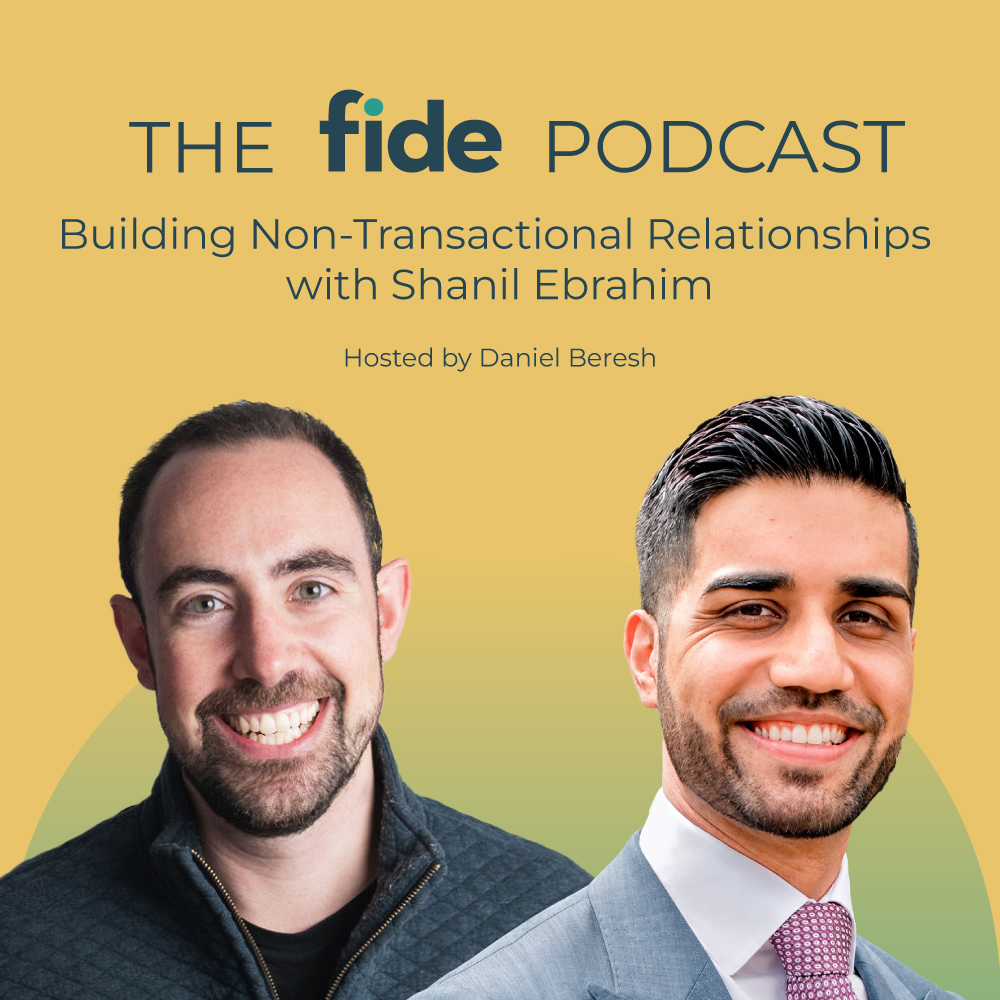
Shanil Ebrahim, Deloitte Canada's Life Sciences and Healthcare leader, shares his insight on how to approach projects and build relationships for the long term. He emphasizes the importance of being a good listener and deeply understanding the client's needs. He highlights the need for expertise and credibility, actively shaping conversations, and thought leadership in the industry.
Establishing credibility in consulting requires continuous learning, checking your ego at the door, and clear communication. And you have to challenge the status quo - but with respect and by bringing research to back up your perspective.
Consulting is a human business that revolves around understanding people and solving their problems. Building trust and maintaining long-term relationships is key to success.
Keywords
consulting, market authority, listening, client needs, expertise, credibility, pre-built solutions, customization, consulting, credibility, continuous learning, ego, clear communication, challenging the status quo, trust, long-term relationships
Takeaways
Sound Bites
Dan Beresh: [00:00:00] Before you listen to this podcast episode, I'm gonna stop you right here. If you are the kind of person who loves to create those transactional relationships, you know, charge a client a fixed amount of money, shake hands, walk away, never to speak again, if you're that kind of person, you may not enjoy this episode.
Because today what we're gonna talk about is how to go deep on a relationship with a client, how to be that trusted advisor who in the room can say something provocative, who can help them to imagine what's possible for them in the future, and have them actually listen to you. This is the Fide Podcast.
This is the podcast where we talk about how to build that market authority, ultimately helping you to fill up your sales pipeline over time. It's the podcast where we talk about how to communicate that authority to the world, to get yourself out there, and ultimately help you to get folks who are coming to you and saying, "Hey, I really need help with this, with this problem that I have."
So today I'm really excited to have Shanil Ibrahim here on the podcast. Shanil is Deloitte Canada's life sciences and healthcare leader. He is a [00:01:00] wonderful human and just absolutely full of insights, and I have had the pleasure of knowing him for several years. So Shanil, thanks very much for coming on the podcast today.
Do you mind giving folks just a little bit of an introduction background, uh, on yourself?
Shanil Ebrahim: It's such a pleasure to be on, Dan. I'm a partner at, uh, Deloitte, and, uh, based out of our Toronto office. And in my role, I get to lead a team of about 1,000 people in life sciences and healthcare, and we do everything from leading strategies from organizations, uh, to implementing AI, digital, and technology for a lot of our solutions that we get to implement.
And also, we prepare organizations for the workforce of the future as well. It's an exciting, exciting gig, and just privileged to be able to serve, uh, the community and, uh, all of Canada within healthcare.
Dan Beresh: So we always start with our top three takeaways that allow you to take something away and, and, and action it to make your consulting practice that much better.
So Shanil, tell me a little bit about what, what would you say in terms of going to market, becoming that authority in [00:02:00] whatever domain it is. Yours, healthcare obviously. Uh, what, what would, what would you recommend?
Shanil Ebrahim: If I had to say three things that, uh, establish yourself as a, as a market authority, the first one is going to be being a great listener and deeply understanding the client's needs, which means taking every opportunity to ask, uh, inquisitive questions and unearth the root of the problems.
The second one, to me, is around expertise and establishing credibility, which means it's not just about participating in conversations with clients, but it's also ensuring that you're shaping the conversations and demonstrating your, your expertise at the end of the day to ensure that they can see that you're a credible player in terms of helping through with, uh, with their problems.
And then the third one is, um, and this is the one that I actually like the most, is around consistently challenging the status quo, uh, which means not shying away from questioning established norms or proposing, you know, bold new approaches. Uh, and this is not just about being provocative for the sake of being [00:03:00] provocative, but just to ensure that the client knows you're not here to just validate, uh, validate what they're thinking at the end of the day, which makes you much more of a trusted advisor by being able to do that.
Dan Beresh: Those are three really great topics. I'm excited to, to dive in. So let's get started. Let's talk about listening. When you say listening, what do you mean?
Shanil Ebrahim: The first- The first step that you're trying to do whenever you're in front of a client is really just understanding what are they struggling with? Why are they even having this conversation with you?
It could be something around their business. It could be something about their position. It could be something that they're trying to actually get over the hill or get buy-in from their own stakeholders that they're not able to do. If you're not asking different questions, and clients are not just willing to just, you know, throw information at you unless you're a very trusted advisor, a lot of times you have to be able to ask different sort of questions like, "What are you..."
Like, "What are you thinking about? Why does it matter to you? What does it mean if you're able to solve this problem?" These are the ways that you're actually asking questions and constantly listening in terms of what are they really trying to say? [00:04:00] What are they truly, uh, trying to achieve? What are their unique challenges?
And this way, anything that you are able to respond with is going to be an insight and solution that's gonna address, uh, that specific challenge. So that's what I mean by listening.
Dan Beresh: The trap is to think you can just lift and shift it without making modifications based on the nuances of the client. This is something that we've talked about on the podcast before.
I think it's such an important message, is no matter what's happening in your week, no matter what's happening on the day, no matter how many other projects are happening or what else is on fire in the rest of your business, you need to park your ego at the door and just take a moment and remember that you have to actively listen.
And what's happened in the past is people have come to us and say, "Hey, Dan, you made this amazing video last year. Could you do the same thing for me?" And when we've done that, and when we haven't listened to the nuances of the client and actually [00:05:00] modified it based on their specifics, and we don't do that anymore, but earlier in my career, I remember I did that once, and the video was way less effective than the original.
Because the original, there is nothing to build it on, right? And so of- you're inevitably, you're gonna be building it custom based on that, um, based on that specific need. And there's al- I think there's an interplay, right? Between how much can you say, "Yes, we've done this before, and, and w- and we can take learnings and best practices," and those are all great.
But if you're not listening in that first initial meeting or series of meetings, and you're just, "Yeah, I can do this. No worries. Let- let's just get it done. Let's bill the client," I mean, that is, that is the, the, really the first nail in the coffin.
Shanil Ebrahim: Yeah, absolutely, right? And, and sometimes clients end up pigeonholing you into a certain area as well to say, "Hey, Deloitte, you've actually built this amazing patient platform previously.
Our patient platform is gonna be at end of life. Uh, we need you to help fix [00:06:00] it." And sure, it's an easy way to actually make business because you've established credibility with one client, and you're able to rinse and repeat that same offering elsewhere, but what you're really trying to unearth is, uh, what are you trying to solve at the end of the day?
Why do you need to replace it? Is it just a compliance reason? Are you trying to gain efficiencies, or are you trying to actually recruit more patients into your business, and you think your platform is gonna be able to do it? All of them actually slightly provide different type of solutions that you're actually trying to uncover, and this is gonna be important just in terms of how you're able to tackle it and how you're able to work with the client 'cause some of them could be a very small thing that you're trying to do.
Sometimes they're actually, uh, undertaking a larger transformation, and this is just one wedge into that transformation.
Dan Beresh: Let me challenge you for a sec, Shanil, though, because why would you not say, "Great. We've, we have this pre-built solution. We've, we've, we'd already done it, and let us help you to, uh, to, to implement it"?
You [00:07:00] already know how to do it. You've got all the best practices you figured out last time on the project. So why start from, from zero? Why do a, you know, a custom solution? I mean, y- you know, in even in business in general, we talk about the fact that doing a completely custom build for every single client i- is inevitably gonna have different nuances that Cause you and your team to spend more time, hurt your margins.
What do you think?
Shanil Ebrahim: So Dan, you asked a good question, right? And I think this is where I would wanna, you know, separate when I say, let's call it a tailored solution versus a custom solution. A tailored solution to me is when I think about a solution, I think about the technology solution, the processes, everything, everything combined that we're trying to address for a client.
That needs to be tailored for every single client because every client has a slightly different problem, and not everything is gonna go the exact same way. Even if the platform is the exact same, their processes are gonna be [00:08:00] completely different. Their change management is gonna be completely different.
The type of people they have within the organization is gonna be different. Their ability to, you know, spend the same amount of, amount of dollars is also gonna be different. The transformation they're undertaking is also gonna be very different. That needs to be very tailored Ultimately, you may end up saying a part of that tailored solution is something that we have actually built previously.
Let's bring in a platform and an asset that we have actually been able to implement, and of course, I would definitely wanna, I would wanna bring that 'cause as you mentioned, you don't wanna do it custom every single time because that takes a lot of risk. If there's something tried, tested, and true that we have actually done previously, let's bring that into this whole package.
But every- everything around that package still needs to be tailored to that client just to make sure that that same solution is, is gonna work within the context of the environment and the challenges that they end up having. So that's gonna be quite important. A great example is, uh, we're in the patient support program, um, business where these type of [00:09:00] services provide, provide a lot of benefits to, uh, pharmaceutical companies, uh, as well as patients who end, end up taking high-cost drugs, so it provides financial services, reimbursement services, and so on.
We have done that patient support program platform implementation for a very large client who have processes, technologies, and everything implemented and extremely mature in that space where they wanted to take this platform is to completely supercharge some of their areas where they were com- completely vulnerable, especially in some disease areas.
And we took that exact same platform for a much smaller company where none of the processes were established, none of the change management was actually established. They didn't actually have the similar sort of capabilities. They just had better relationship with the patients. So you're talking about the exact same platform in a completely different environment.
As you can imagine, the whole offering itself starts to look very different when, when you look at it at the end of the day.
Dan Beresh: I think you raise a great point of that line between [00:10:00] what you have previously built, which is important because the, it, it, it de-risks, right?
Shanil Ebrahim: Right.
Dan Beresh: And then of course, understanding the specific nuances of the client.
And actually, I was writing about this in our newsletter from last month, how do we talk about these pre-built solutions that we go to market with? And one of the things that has consistently, I think, been effective is talking about modularity. Mm-hmm. So it's not just one platform, okay, here's the cost, you're gonna buy it, and if you don't buy it, you can't get everything, right?
What are the elements of that? And to your point, the change management, because we so often think about this or from a service level, it's easy to think about it as just a technology implementation, but so much more has to come along with it. You know, you know that kind of mid- middle ground between yes, we're gonna bring you a solution that we know is tried and true, but also we're gonna go the extra mile and customize it for your specific organization.
I mean, that must be To some extent, the, the holy grail, uh, for some of these clients and their needs.
Shanil Ebrahim: Yeah, absolutely. And, and, uh, it's one of the reasons [00:11:00] clients come to us, right? Because they know we've actually done this in the market, so it could be maturity of the product, maturity of the asset, maturity of the accelerator, maturity of the approach, and that's what they're essentially buying from you as well.
But at the same time, they want the level of agility within their environment, and if you don't provide them the agility and the maturity and ensure that you're making the appropriate trade-offs with the client, then it just won't work. Because otherwise, if you just bring a maturity of a product, then you're a technology vendor.
Uh, if you just bring just full agility, you're talking about a significant level of customization that's gonna end up costing them a lot of money, and it's gonna be very difficult to maintain and sustain over time. So you always have to be able to balance those two, and working with a client, you're actually able to make trade-offs with the client to ensure that they're, that they're set up for success.
Dan Beresh: And I think getting back to what you were saying earlier, it's about listening and- Mm-hmm ... figuring out where you need to modify, where you need to customize, [00:12:00] and on the other hand, where you can bring in that pre-built solution to ultimately create that engagement package that's gonna be ideal for them.
Shanil Ebrahim: Absolutely.
Dan Beresh: I'm just curious. I don't mean to put you on the spot, but how would you talk about that? If you went out publicly talking about your, your healthcare offering and you wanted to, you know, think about some, some folks who, who are in the market who are potentially looking for solutions like this.
How would you talk to them about drawing that line between pre-built and customized?
Shanil Ebrahim: This, this is a conversation I've had, um, quite a bit with clients just around pre-built versus customized solution, and I'm telling you, Dan, it's not an easy conversation. Um, we can talk about the degree of customization across every solution, and theoretically, it sounds, sounds easy, but until a client basically sees what you're talking about, it's very, very challenging.
So a g- a great example is I'm gonna take, uh, um, a pharmacy management solution as an example, where we said, "Look, [00:13:00] you can buy the solution, and we're going to end up using a lot of modules from the out-of-the-box solution." So this is, let's take the package, let's use as much as possible, and, uh, adapt, adapt some of your processes to what's actually in the solution.
They said, "This makes a lot of sense. This is actually gonna be much more sustainable. Fantastic. Let's start the process." So we started the work, and very quickly they start to s- uh, they start to notice, hold on- I have to change my processes quite a bit to be able- They wanna keep their old
Dan Beresh: process.
Shanil Ebrahim: They- Exactly.
They're like, "This is gonna completely change the experience if we end up doing that." And w- we said yes, but it's gonna end up being an enhanced experience. "We're not ready. That's a lot of change management. No one's gonna be, no one's gonna sign up for it." And we said, "Okay, that's great. Let's, let's talk about some of the trade-offs you're gonna be making."
And so now it involved a level of customization, and as you know, Dan, you've been in the business long enough to know the degree of [00:14:00] customization could be quite extensive, and each customization leads to a lot more money. And now you multiply that across m- m- multiple, multiple modules because you're talking about a lot of requirements.
So now you're, you're talking about a, a significant degree of customization. And, and now the client is gonna come to you and ask, "Hold on, you knew our business." You knew that we would need a certain level of customization, and now you're charging me for a whole bunch of stuff around this. I
Dan Beresh: mean, that's not, that's not a nice conversation to have.
Shanil Ebrahim: Yeah, exactly. It's, it's a very, very testy conversation to be- to have, right? Which is, which is one of the biggest reasons, kind of going back to that original point about when you have the conversation, the client is educating you on their business, and you're trying to educate them at the same time around what are kind of the different options that they have and what are the trade-offs that they're making, and really getting them immersed into it as much as possible.
And no, it's never gonna be a perfect science. And as part of a trusted relationship, [00:15:00] you know you're going in with some level of certainty and some level of uncertainty. And it's around what the partnership means to work together to solve some of those problems. And of course, both sides are gonna be making investments, and so both sides are gonna be taking on some sort of risk.
But that comes with the, with the whole relationship, just in terms of how we actually get to it to get to that pre-built versus customization or any sort of uncertainty that we end up working with as well.
Dan Beresh: Yeah. That's a, that's a really tough conversation to have and, and definitely something to, to think about in advance, and to your point, to, to make sure you are listening so that hopefully you understand how to, how to take it from, from the top.
Um, let's talk a little bit about your other, uh, your, your other best practices.
Shanil Ebrahim: Yeah. The second one primarily was, um, around expertise, and it's not just about showcasing expertise, but it's around how I present that expertise, which is even more critical. Um, so I personally take a lot of pride in not just participating in conversations within the healthcare ecosystem, but, [00:16:00] but actively shaping them, uh, which means putting out thought leadership pieces, speaking at conferences, uh, or engaging in podcasts like this, where I make it very clear to clients that we're at the forefront of s- a lot of these conversations.
We're steering discussions on key topics such as the future of health in Canada, uh, digital transformation in Canada, or the integration of AI in healthcare. And this positions us not just as experts, but really as pioneers as to shaping, you know, the future of healthcare, which adds credibility to anything you're doing.
And that's another thing the client is actually buying from you, and the reason that they're talking to you is around the credibility and the expertise because if you don't bring that to the table and you don't bring in that domain knowledge, then th- they, they themselves will question in terms of what are going to be the capabilities that you're gonna bring to the table, um, and, and establishing that credibility right off the bat is gonna be quite important.
Dan Beresh: You can't just regurgitate what is [00:17:00] out there in the market. You can't just read things and repost. You have to have your own perspective, and that's something we were talking about on, uh, an episode of the podcast with Gord Sanford, if you wanna go check that out. But- To some extent it's a bit chicken and egg, right?
Because to be the expert you have to put yourself out there, and you have to have that perspective, and you have to push the needle. Uh, but on the other hand, you have to know enough to be able to do that, right? You have to educate yourself enough in the, in the market. I mean, what's someone like you doing to, to make sure that when you go out there you do have a unique perspective?
I mean, how are you keeping up with, uh, with that?
Shanil Ebrahim: Uh, in, in a lot of ways, right? There's the basic, uh, things around reading, research, being up to, up to date with trends. To me, that's a little bit of sensing the market in terms of what's actually happening there so you're always abreast around, uh, uh, a- around the latest movements in the industry.
The second one is, uh, conversations, uh, with individuals, clients, [00:18:00] stakeholders, thought leaders. Any conversation that I end up having, whether it is as informal as a coffee, lunch, dinner versus something formal which could be an actual workshop or a working session, I'm always taking something in. And again, this comes back to asking great questions, listening, to truly understand what's happening in the market.
And, uh, this, this keeps you always ahead as well, just in terms of what other clients and other stakeholders are doing. And the third thing is a little bit around doing Uh, and what I mean by that is every single project, every single opportunity moves your credibility quite far ahead because now you understand and have put that into practice, and that becomes a huge part around how you actually establish credibility or how you build credibility over time.
And this is something that I feel whether you are a consultant or you are a partner, you have to constantly keep learning 'cause the industry continues to change, and it doesn't take much to be falling behind, [00:19:00] uh, when it comes to that. Another big part of it, and this is something we have to always do as partners, is we really gotta check our ego at the door.
Um, a big part of establishing credibility is to be able to show that you're not, you're not afraid to ask what may seem like stupid questions, um, because you may end up saying, "Look, I'm gonna end up intentionally asking really stupid questions just to ensure that we're all aligned just in terms of what we're, what we're after."
And it's not about being ignorant at the end of the day. Because in consulting, if you're not, if you're not willing to be humble and ready to admit that no matter how much you know or how many expertise-- or how many years of expertise you have in consulting, there's always more to learn. And everyone knows that, that every client's business is very different.
Um, so if you end up asking, "You know, I should probably know this, but what, what are the two to three top ways that you actually earn revenue in your business, and how does it actually [00:20:00] differ from the, um, the ways that the rest of the industry actually does business as well?" And they say, "Yeah, you know, it's a good question 'cause we actually do everything that's the same."
Or they, they may end up saying, "You know what? It-- people typically think that we end up working exactly like the rest of the industry, but our channels are, are actually very different, and the way that we earn revenue is very different from our competitor, and this is exactly how we do it." And this just ensures that we're able to park anything that are preconceived notions coming into it that's actually going to alter the way that we're, we're gonna drive and address some of the problems as well.
Dan Beresh: So much easier said than done, parking your ego at the door. And there are gonna be people who are gonna listen to this, and they're gonna say, "Yeah, absolutely, I park my ego at the door." And then you're in the moment with the client, and you're thinking, "Ah, I really need to ask this question, but it's a, it's a dumb question."
Shanil Ebrahim: Right.
Dan Beresh: How do you, how do you get over that?
Shanil Ebrahim: It's, it's, it's not easy. And I could tell you that especially, [00:21:00] um, in, in, in my position over the years, it was a huge challenge because a lot of people, um, would say, "Shanil, you're the subject matter expert. Good luck getting your-" You got a PhD.
Dan Beresh: Yeah. You went to Stanford.
Shanil Ebrahim: Yeah, exactly.
Dan Beresh: And I- You, you know, a- and you're leading a team of 1,000 people, and the last thing you want is for that person to say, "Oh yeah, that competitor, well, he didn't ask the stupid questions, so..."
Shanil Ebrahim: Yeah, exactly. And so I think, I think that that's quite important. And that, that's one of the reasons where I come in very, very prepared into meetings so that I'd
at least I know the foundational stuff around the, the domain, uh, the, the subject matter, their cl- the client's business. And in areas where, where I don't know the question, I would ... I, I'd wanna say, "Look, I, I wanna make sure that we, we are creating a psychological safety that we're able to ask any questions.
And some of them would seem apparent, but I just wanna make sure that I'm putting it out there, and we're able to build on top of it." And I also say in some of the kickoff meetings, "Let's, [00:22:00] let's have some of our team members ask any questions that they have, and I just wanna be mindful and respectful that not everyone's gonna come in with the same level of knowledge."
And vice versa to the clients. I wanna say, "Throughout the project, I wanna make sure you have the psychological safety to ask us any questions as well." Because clients have a very difficult time asking some questions, uh, to us to say, you know, "What does it mean when you say XYZ?" And we say, "This is what it means."
And they're like, "W- I, I, I got this part, but I'm not sure about these two other areas." And we explain it again. And they're like, "Okay, I, I think I get it." And they wait until the very end. They look at the roadmap, and they say, "I still have no idea what this means."
Dan Beresh: They didn't wanna ask you again. They
Shanil Ebrahim: didn't- They didn't wanna ask me
they were worried
Dan Beresh: about it.
Shanil Ebrahim: And exactly. And what do they end up doing? They spend a lot of time trying to translate your deliverable into their words, and it creates a gap. And a lot of times, that's one of the reasons why [00:23:00] strategies and deliverables get put on the shelf because- we didn't end up, we didn't enable them well enough to be able to take this and execute on it.
And we play a huge role in, in terms of that, and clients play a huge role to ensure that we understand their business. And if they're not willing to invest vice versa, then it's th-th- it's this is not gonna work. So now I use a lot of kickoff meetings, and this is coming back to market authority. I'm able to say these things.
These are the two to three things I've learned, that if we don't actually create the psychological safety and ask really stupid questions, um, then this is not gonna work for both of us. And ultimately, we're all sharing the exact same outcome. So why don't we do everything in our part to ask all of the questions along the way, and we're all, all here to help each other.
And clients are generally, uh, respectful of that, and they, they appreciate that this has happened to them before as well
Dan Beresh: Junaid, you have unleashed the [00:24:00] clear communication rant from Dan, so you're gonna have to forgive me here for a second. But this is a lot of what we do with our clients in our work, is to help figure out, how do we talk about this in a clear way?
And I think as consultants, so often what ends up happening is we just start to speak in this kind of internal, uh, language that's full of acronyms, or we assume the client knows what we mean. And it's so important at every stage to, I think, take a step back and say, "Hang on. Am I communicating this in a way that is gonna make se-" 'Cause what is the purpose of communication in the first place, right?
It's really to get someone to genuinely understand what you mean. Mm-hmm. But I think so often we think of communication as a means to promote this, and I'm, you know, air quotes here, "authority"- Mm-hmm ... by using really big words, terms that other people don't understand, and, and an in-group language that exists within our team, within our, you know, firm, within our vertical [00:25:00] that, you know, that we use in the implementation of these types of project we've been talking about.
And so the end purpose of your communication is completely stunted. And so this is what a lot of the work we end up doing, is we, we come in and help folks to understand, here's how you, you know, here's how you communicate this succinctly in a way that people are gonna get it. Mm-hmm. Uh, but I think that that's such a key element that you're talking about, and it's, it's ironic that using those, those terms, while they might make you feel like you're an authority in the moment, it actually is doing the opposite.
It's actually undercutting your ultimate authority in the room.
Shanil Ebrahim: Yeah, absolutely. I mean, w- you know, what you talk about, you know, consulting jargon and consulting speak, it's something a lot of clients have actually mentioned. It's like, "Can you please dumb it down for us?" Which is basically saying, "I have no idea what you're saying, and I need to spend a lot of time translating it for my team."
And to me, it's actually being disrespectful of their business because if you're using language that, that is not reflective of [00:26:00] their journey, then that means you're probably not the right partner for them either because consulting is a partnership at the end of the day, and we need to be collaborative with our, with our clients.
And ultimately, anything that we do, um, in terms of communication, whether it is a presentation or putting a deck together or, uh, you know, just even conversation that we have on a day-to-day basis, it's all about leading to better outcomes because- Consultants, we're not, we're not cheap. And we're brought in based on our capability, expertise, and, um, and solutions that we've built in the market, and it's all about driving change for, for the client.
And if, if those changes, uh, or any strategy or, uh, any recommendation we provide aren't communicated effectively to everyone involved, and I mean not just the C-suite, uh, but this is to frontline employees who are gonna be using this and executing this on a daily basis, they're going to fail [00:27:00] And if they fail, that's a reflection back on us that we were not able to articulate the benefits and the n- necessity of the changes, and we haven't b- got the buy-in.
So right now, I do spend actually a significant amount of time looking at a lot of the deliverables that we put together- Just
Dan Beresh: making sure they're clear ...
Shanil Ebrahim: yeah, it just, it's just clear. Let, let's just s- like say, say it as is. St- let's not... Stop talking about transformation this, synergy that, um-
Dan Beresh: Or leverage, that's my other favorite
Shanil Ebrahim: one
leverage, uh, yeah, a- you know, activation of this, whatever it is. Uh, at one point they're like, "What are we really trying to say?" And, and I think, I think it, it's becoming more and more important because there was a style of communication in consulting that has prevailed, and it has made us look like a market authority or kind of leaders or really smart people.
Um, but nowadays people, people don't wanna pay for consultants to just [00:28:00] sound smart, uh, and seem like we got a great independent market authority. They, they want action, clear strategies, and we, we, it, there's an onus on us to be able to improve our communication to be able to do that.
Dan Beresh: I, I, I agree, and I think that it comes along with the advent of technology like AI.
Mm. Of course, we had to talk about AI 'cause the podcast is 2024, right? We couldn't- Right. ... couldn't not. So here we are. But the moment we had, I think, you're talking about is I'm a consultant, I'm so smart, and I'm gonna use these really smart words, and I'm gonna send you this deck that's full of jargon, and you're gonna say, "Wow, that is so incredible."
Um, because not a lot of information, I think, was available, but now when you have, when you can just Google something, or even better, you can go on ChatGPT and, and ask the question, it becomes the onus of the consultant to actually make it simple and, and customize the answer specific to the client. And that, that to me is value, right?
Where before the knowledge was kind of a little more locked away and the consultant could say, "Yeah, absolutely. I come with the knowledge, and I'm gonna do this, and you're not gonna really understand what I'm doing, but I'm gonna fix your [00:29:00] problem." Now it's kind of the opposite. It's, "Yeah, I'm fixing your problem, but I, I also need to make you deeply understand how I'm doing it and then bring you along the journey to make sure that you're, um, that you're there."
Let's talk about your third idea now here, Shanil. Your, y- you mentioned earlier challenging the status quo and, and, and being that person to, to really bring bold ideas. So w- what's that about?
Shanil Ebrahim: Yeah. It's, uh, th- this one is, uh, is one of my favorite ones because, you know, whether I'm in a, in a meeting or a strategy session or a workshop, I, I, I really don't shy away from questioning established norms or just proposing bold new approaches.
Um, and this is not just with clients. I do this internally. Even things that I have even used, you know, multiple times in my own engagements- I sometimes look at it and say, "Why are we doing this?"
Dan Beresh: Hmm.
Shanil Ebrahim: Like, why are we even using this framework? Uh, and, and Dan, this is not just about being provocative for the sake of being provocative or being a shit disturber.
You know, it's about demonstrating courage and thought [00:30:00] leadership just in terms of we don't always have to do things because we've done it before. Sometimes it doesn't make sense anymore. And, and when clients or even our internal folks see that you're not afraid to push boundaries and can back up your ideas with solid research and data and just, just proven success, um, they listen.
And I'm, I'm mindful to, you know, frame these constructively because the last thing people would want is to say, "Great, there's someone coming in and just asking us things that are-- have been established for years, and I'm not sure why they're questioning everything under the sun." So you have to understand where it makes sense to, uh, ask those questions.
And a lot of times I try to, um, I try to disarm, um, people and ensure that they don't have their guards up by, by asking, "Can I respectfully challenge that notion? Uh, let me be intentionally provocative for a minute." And this helps [00:31:00] have open conversations and open discussions just around, um, around the fact that we're not here just to affirm previous ideas that have been put on the table, so a lot of previous ideas that haven't worked, but to truly be an advisor and push the boundaries when it comes to it.
And sometimes that means tossing out your playbook, um, that you think has, uh, worked before, but for this time and place, it doesn't make sense anymore, and that's a very difficult conversation to have, and sometimes it does take a lot of courage. But to me, it reinforces my position as a market authority to be able to do that.
Dan Beresh: If a myopic client is just looking around at what the competition is doing and coming to us with tactics and saying, "Hey, I wanna do this, I wanna do that," I mean, they're, you know, they're maybe in a playing field that's say, zero to 20. And we- it's our job to give them the ability to imagine going all the way to 100.
And they may not go all the way to 100, right? Maybe we're gonna land at 50 or 60, but it gives them the ability [00:32:00] to see the bigger picture and to see what's possible so that we take them out of that, uh, kind of reactive state that they might otherwise be in. And I think in a, in a way that, that very much is our job as market authorities and, and as consultants.
The real question though, of course, is about not seeming like a shit disturber because there is a real risk, right, Shanil?, as you're talking about, and people do have egos and people do get fixated on the solutions that they've come up with in their heads. So what do you think? I mean, Shanil?, what, how do you, how do you disarm yourself in that way that you're saying so that you, you don't come off as someone who's just being intentionally provocative?
Shanil Ebrahim: And this comes with, this comes with trust and credibility. Um, it, it, it's hard to do that from day one when you're starting to ask questions and starting to challenge everything under the sun, 'cause a lot of people will say, "This has been my business and has been very successful over the years. I'm not sure why this new person is coming in and just asking everything."
And it, and it does piss people off. I do think it [00:33:00] does take time to establish trust with individuals, and sometimes if you, if you still want to be, want to ask those questions, let's call it day one, day two, you may be pulling the client to the side and ensuring that you're not asking these questions just in front of their employees as well, because a lot of things, um, that you may be questioning may be fundamental to how they succeed as a leader.
And you have to figure out the time, the place, uh, who the client is, and just ensuring that you're still doing it in a respectful way. And so I do think that comes with some level of experience as well to be able to do that, which is why, you know, credibility and expertise and everything does come in.
It's, it's about reading the room and being just reflective just around, you know, what has worked in the past and what hasn't.
Dan Beresh: I think it's ultimately a human business, no matter how much technology- Mm-hmm ... we talk about getting implemented. It is about reading the room, forming that trusted relationship, and then- Ultimately having the [00:34:00] emotional intelligence to, to know when to do that and, and when you do it, to know how to do it in the correct way.
Shanil Ebrahim: Yeah. And, and what you mentioned, um, is, is very important, right? Consulting is a human business and, uh, you know, a lot of times we talk about strategy and, uh, and data and, and technology, but it really comes down to understanding that everything that we do in consulting is about human interaction and human relationship because our work revolves around understanding people, whether it's our clients, whether it's our own stakeholders, uh, including our leaders, whether it's our people.
Um, and every consulting project aims to solve, you know, problems that ultimately affect individuals at the end of the day, right? And if, if you don't appreciate that, then it's hard to understand how, uh, you know, things like empathy and emotional intelligence, um, is a critical part of fostering trust and openness with clients as well, and that leads to collaboration and problem-solving.
And [00:35:00] ultimately, that's something that I really have taken away over the years that I've been in consulting, where I started to realize people don't come to me just for my domain expertise and my ability to finish projects in high quality. Of course, that's gonna be one big part of it. But it comes down to the, uh, the, the feeling that they can actually trust me to help them solve their problems, which means I may not directly be the person solving that problem, but I'm going to be bringing in the people, bringing in the solutions, whatever it is, to ensure that they are set up for success.
And that's what, what separates A lot of our senior leaders from, uh, uh, junior folks as well, just to be able to understand that concept around how we're, how we're better serving our, our, our clients.
Dan Beresh: Seeing the long term in terms of the relationship, but also having the ability to form that relationship, maintain that relationship, be that [00:36:00] trusted advisor, and be a, a real decent human being- Mm-hmm
and not just think about it, as you say, uh, as a technology project, but ultimately as a human project, and what technology are we implementing ever that is not ultimately in the service of helping some human do something, right? Yeah. And so that is-
Shanil Ebrahim: Absolutely ...
Dan Beresh: what it is always gonna come down to.
Shanil Ebrahim: No one wants to feel like they're just doing a transaction with you where they provide you, uh, a service, or we provide them a service, and they, they give us money, and then we walk away, because that basically means we're not invested in their success, and they're not invested in our success.
And that's what a transaction is at the end of the day. It's there's a job to be done, you pay money, and that's what a, a lot of our, you know, technology vendors are for. You know, there's a license. We end up paying it. That's good to go, but this is just more than that. It's about long-term relationship, and, and if you're invested in the long run, all of these things will add up and, [00:37:00] and work out.
Um, so which means sometimes you give more than you take, and sometimes it's vice versa. And, um, ultimately, a long relationship i- is going to end up being a fruitful partnership for, for both parties at the end of the day.
Dan Beresh: At the risk of being reductive, it's almost just about being a decent human being.
These are kind of basic things we've talked about, right? But I think they bear mentioning because we can get so busy, and we become kind of this more robotic, corporate, salesy type of person, and it's a matter of shedding that and just saying, "Yeah, we need to actively listen," and then come around and say, "Hey, let's do this together," and a rising tide lifts all ships.
It reminds me of a situation I had with a vendor a few years ago, and it's fun to be in that role, I think, because it's so instructive about the kinds of things that, you know, I've done wrong in the past. I certainly have changed a lot of things that, the way I do from hiring other people. And one of those, uh, the major thing that I, you know, I, I keep coming back [00:38:00] to is when I had a vendor say, "Dan, I've provided so much extra value in this project that we haven't charged you any money for."
And I sat there and thought, "Wow, you know what? That's funny because I actually didn't, I didn't think there was any more value that was provided outside of the initial, the initial fee." The things that he thought were valuable, I didn't even see were happening and, and frankly, I didn't care about. Value is so much in the eye of the beholder, and I think when you have that ability to understand where your client is at, it enables you to clearly understand the things that they are gonna consider valuable and to really focus on those, right?
As opposed to just this myopic view of you, your delivery, and a focus, uh, so much focus on, on the money that's coming in at the end of the project. So Shanil, thank you so much for this podcast. Thank you so much for the, the advice, the tips, uh, and, and, and really digging into what it takes to [00:39:00] make a non-transactional relationship.
Shanil Ebrahim: Amazing. Thanks a lot for having me, Dan.
Dan Beresh: This has been the Fide Podcast. I'm Dan. I founded Fide Creative, and we're a marketing agency that helps you get out there with the message about the value that you deliver as a professional services provider. If you're interested in learning a little bit more about what we do, take a look at our website, Fide Creative.
That's F-I-D-E creative.com. We'll see you next time
